Brain Health, Mood, and Cognitive Disorders: What Modern Science Actually Shows
How Heat Affects the Brain
The human brain is a complex organ that is sensitive to a variety of factors, including temperature. Heat can have both positive and negative effects on the brain, depending on the specific circumstances.
On the positive side, mild heat can help to improve blood flow to the brain, which can enhance cognitive function and reduce the risk of stroke. This is why heat therapy is sometimes used to treat conditions like dementia and stroke.
On the negative side, excessive heat can cause a variety of problems, including heat exhaustion, heat stroke, and even brain damage. This is why it’s important to stay cool during hot weather and to take precautions to prevent overheating, especially for vulnerable populations like the elderly and young children.
One way that heat affects the brain is by causing dehydration. When the body becomes dehydrated, it can’t regulate its temperature as effectively, which can lead to overheating. Dehydration can also cause the brain to shrink, which can lead to confusion, headaches, and other symptoms.
Another way that heat affects the brain is by causing the blood vessels in the brain to dilate. This can increase blood flow to the brain, which can be beneficial in some cases, but it can also lead to an increase in brain pressure, which can be dangerous.
Heat can also cause the brain to release more of certain chemicals, such as dopamine and serotonin. These chemicals can have a variety of effects on the brain, including mood changes, increased alertness, and improved cognitive function. However, excessive release of these chemicals can also lead to problems like agitation, confusion, and even seizures.
Overall, heat can have both positive and negative effects on the brain, and it’s important to be aware of these effects and take precautions to stay cool and hydrated, especially during hot weather. If you or someone you know is experiencing symptoms of heat-related illness, it’s important to seek medical attention immediately.
The main etiology of depression
Depression is one of the most common and common mental disorders, and although it is widely known, its causes are rare.
Depression is an emotional disorder in which emotional pain and discomfort are expressed. This condition also includes psychological and physical symptoms, so it is necessary to assess the patient’s surroundings, including the family, said author Mark Rodriguez Castro. Or work or emotional or marital status, to diagnose and apply the appropriate treatment.
Complications of grief Depression goes beyond feeling sad, so you should distinguish between depression and sadness. The main difference is that the latter is a natural response to a painful motivation, and this expression of emotionally manifested pain is a necessary response mechanism. However, if sadness persists and becomes chronic, whether for some reason or no reason and in more severe forms, which affects the normal activity of the patient in all areas of his daily life, then we are talking about depression.
Depression is not a natural reaction, but a disease that can lead to disability. Epidemiological studies reveal that about 20% of the US population suffers from the disease.
DNA If a member of the immediate family suffers from depression (parents or siblings) this will increase the risk of this disease by 25 to 30%.
According to studies on monozygotic twins, it was found that the risk of depression in a sibling increases by up to 50% due to genetic factors. However, in dizygotic twins, this probability is significantly reduced by up to about 25%.
As science advances in genetics, genes have been found that relate to an individual’s willingness to be more or less prone to depression, such as a short serotonin vector. It is estimated that up to 214 genes may be responsible for the risk of depression.
Physiological factors Depression is associated with a decrease in a neurotransmitter called serotonin, especially in the dendrites that transmit the pulses of one neuron to another group of cells. For this reason, psychiatrists sometimes use a range of medications, such as selective serotonin reuptake inhibitors, which increase their willingness to accept serotonin levels in depressed patients.
The prevalence of this disease has been shown to increase significantly in women, especially during pregnancy and the postpartum period due to hormonal imbalances. Postpartum depression is defined as a transient disorder that appears between two and four days after birth and disappears automatically within two weeks. Moreover, there are two types of postpartum depression, the “Baby Blues, Depression Disorder” itself.
In medicine, the name “Baby Blues” is called the mild change in the mood of the mother, which is usually accompanied by symptoms of mild depression, mainly manifested in lack of concentration, anxiety, and sadness, as well as a mood disorder and the urge to cry. This condition does not require treatment as it automatically disappears within a short time.
Conversely, in the case of postpartum depression, symptoms appear within 12 weeks and are more severe, as they can involve psychological and physical symptoms, for example, in the first case can generate a sense of futility, suicidal ideation or thoughts. Related to death. As for physical symptoms, it may include headaches and abdominal pain, which requires medical treatment.
Man goes through life without fear due to brain disorder
A U.S 43 years old man declared as F.S from Florida. has a rare genetic condition causing him a brain disease that makes anyone who has this brain disorder absent of fear, they can’t feel anything when they are in a situation that is terrifying for a normal person.
A neuroscientist from the University of California who pursue many patients with the same brain disease and a specialist in Chiari malformation said “if he confronts a life-threatening situation as he did many times through his life his system won’t declare any type of fear as we may experience you and me”
At the University of California center, researchers tried many experiences trying to understand this brain disease, they put him few inches near to a poisonous snake, been held at gunpoint and knifepoint, in addition to many life-threatening stories he has through his life and nothing seems to agitate the Florida man.
It’s because F.S a middle-aged man of four kids and a master degree in sociology, work for a state entity and have a truly nice family has Urbach-Wiethe disease, which causes calcium deposit to build in the brain’s amygdala which makes it useless and stopped it from doing its normal function.
Here is a definition of the amygdala from Wikipedia :
“The amygdala is one of two almond-shaped clusters of nuclei located deep and medially within the temporal lobes of the brain in complex vertebrates, including humans. Shown in research to perform a primary role in the processing of memory, decision-making and emotional responses (including fear, anxiety, and aggression), the amygdalae are considered part of the limbic system.”
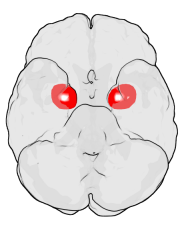
amygdala picture from Wikipedia
Amygdala is a part of the brain responsible of how we do response to fear by sending signals whenever it senses danger to the key parts of our body that most react to that type of danger, like excretion of some hormones or lunch the fight or flight response system, or making the palms sweaty or even increase the heartbeat, since his amygdala doesn’t work he doesn’t response to fear like the rest of us.
The only two moments he felt anxious was when he was injected by carbon dioxide in the University of California by scientists and researchers to mimic suffocation and a second time was way before when he was a child and came close to a large catfish.
F.S is leading a normal life and feels all other emotions; it may be that the bad events appear to us because we know that she was threatened. so as a result, but she herself did not see herself threatened. so as a result, she is lacking the bad stuff in her life.
The Urbach-Wiethe disease is a very rare brain disease only 400 from all the world population are estimated to have this brain disorder. The F.S case may one day help researches to identify a solution to this brain malfunction to help other people with Chiari malformation, traumatic brain injury, post-concussion syndrome or post-traumatic stress disorder. if scientists and biologists can find ways to work with the amygdala responses, many brain malfunction patients may find relief.